Top Web Design Trends 2026: 3D Immersion, Organic Layouts, AI Personalization & What's Actually Working
A definitive guide to the web design trends dominating 2026 — from immersive 3D experiences and biomorphic layouts to AI-driven personalization and kinetic typography.
Top Web Design Trends 2026: 3D Immersion, Organic Layouts, AI Personalization & What's Actually Working
If your website was designed more than 18 months ago, there's a strong chance it's already costing you business. Web design trends in 2026 have evolved dramatically — and the gap between cutting-edge websites and dated ones has never been wider. According to Stanford's 2026 Web Credibility Study, 94% of first impressions are design-driven, and users form that impression in 0.05 seconds.
This isn't a list of aesthetic preferences. Every trend in this guide is backed by conversion data, user behavior research, and real-world performance results. Whether you're planning a website redesign, briefing an agency, or simply staying ahead of the curve, this is your definitive guide to web design trends 2026 — and how to apply them strategically.
Why 2026 Is a Pivotal Year for Web Design
Three converging forces are reshaping what websites look and feel like in 2026:
- AI design tools have democratized high-end aesthetics — what required a $50K design agency in 2022 can now be achieved by a skilled team with AI assistance.
- User expectations have been raised by immersive apps — consumers now expect website experiences that feel like apps, not digital brochures.
- Performance and design must coexist — Google's Core Web Vitals and the explosion of mobile-first browsing mean beautiful sites that load slowly are being penalized both by algorithms and by users.
The brands winning in 2026 understand this: your website is your most important marketing asset. Let's look at exactly what the top-performing sites are doing differently.
Trend #1: 3D Immersion and Depth-First Design
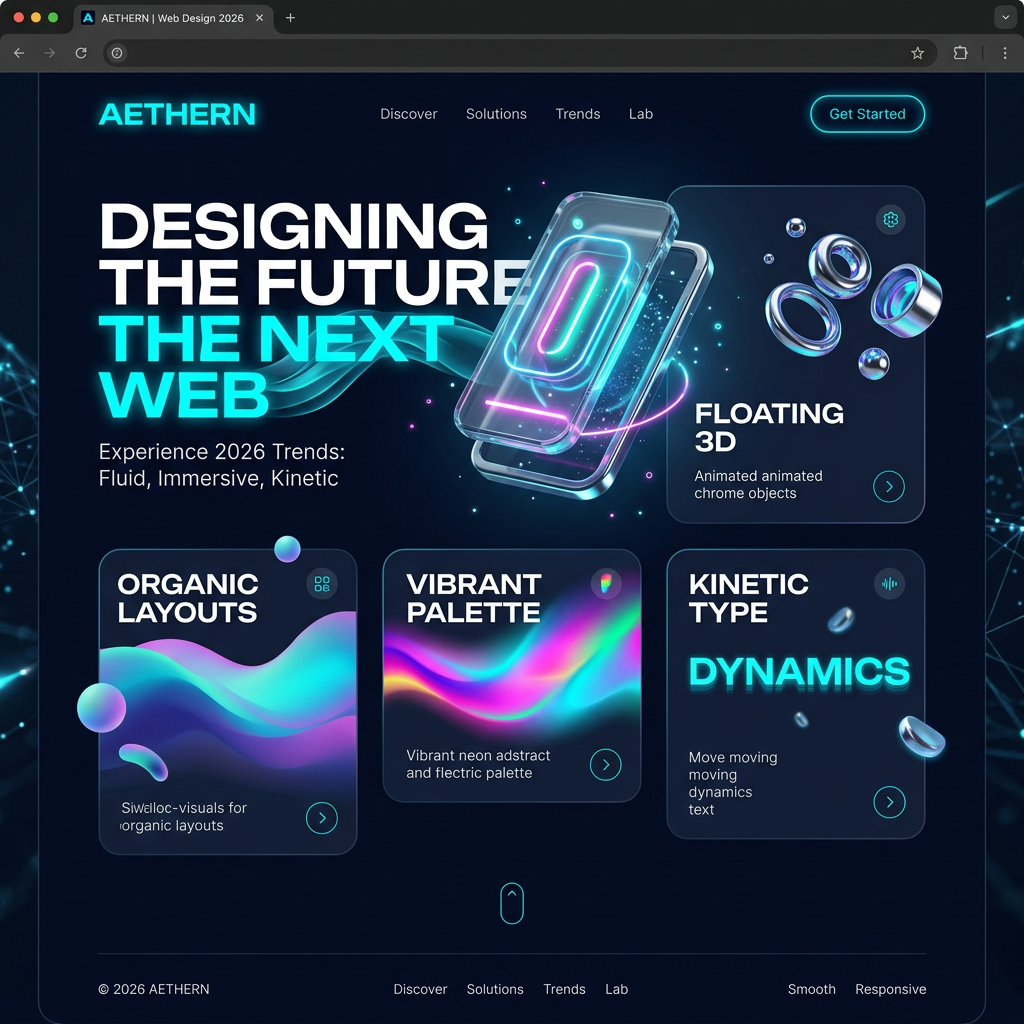
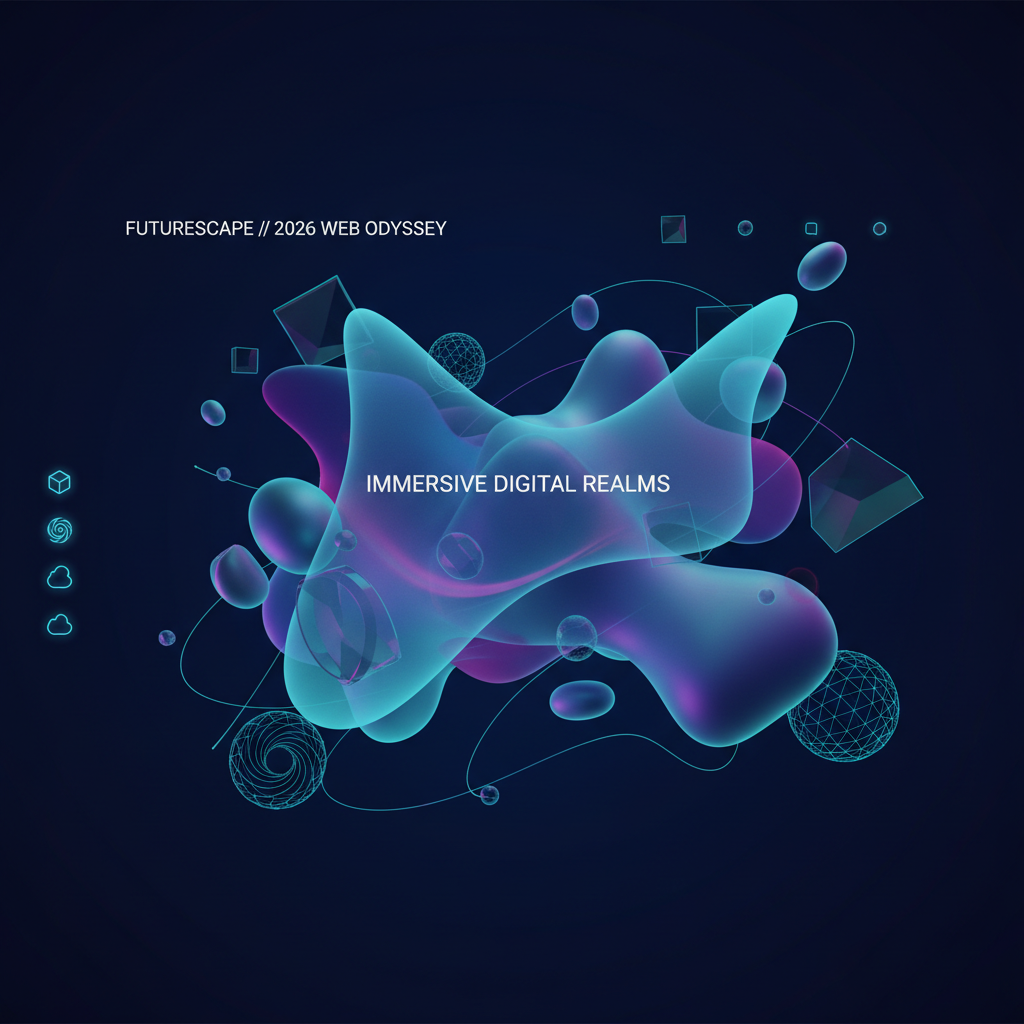
3D web experiences have crossed the threshold from experimental novelty to mainstream expectation in 2026. Thanks to WebGL advances, the widespread adoption of Three.js, and GPU-accelerated rendering in Chrome and Safari, truly immersive 3D elements are now achievable without crippling load times.
What does 3D immersion look like in practice?
- Interactive 3D product showcases — Rotate, zoom, and inspect products in real space before purchasing.
- Parallax depth layers — Multiple depth planes that respond to cursor movement or scroll, creating a sense of physical space.
- 3D typography — Hero headlines that have weight, shadow, and dimensional presence.
- Ambient 3D backgrounds — Subtle geometric environments that make pages feel alive without distracting from content.
Performance note: The best 3D implementations in 2026 load in under 2 seconds by using low-polygon models, progressive loading, and hardware acceleration. If your 3D elements tank your Core Web Vitals score, you've done it wrong.
Who Should Use 3D Design
3D immersion delivers the highest ROI for: SaaS products, e-commerce, luxury brands, technology companies, and creative agencies. If your audience expects innovation, 3D signals that you're ahead of the curve.
Trend #2: Organic & Biomorphic Layouts
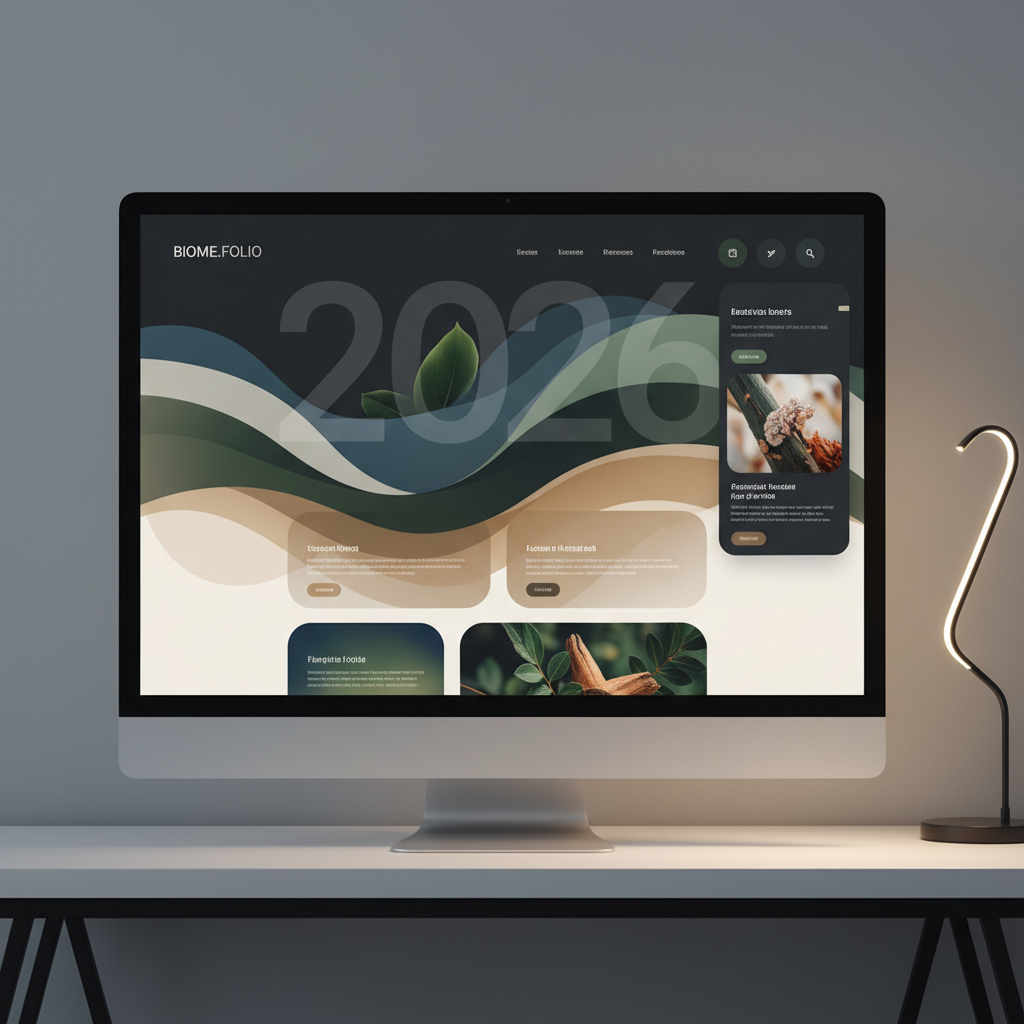
The era of rigid grid layouts is officially over. Organic web design — also called biomorphic or fluid design — replaces sharp corners and predictable columns with flowing, nature-inspired shapes, asymmetric sections, and layouts that feel alive.
This isn't just aesthetic. Research from Nielsen Norman Group's 2026 UX report shows that organic layouts reduce cognitive load by 23% and increase time-on-page by an average of 34 seconds compared to traditional grid-based designs.
Key characteristics of organic web design in 2026:
- 🌀 SVG blob shapes as background elements and content containers
- 🌀 Curved section dividers replacing the standard horizontal rule
- 🌀 Asymmetric image placement that creates visual tension and interest
- 🌀 Fluid typography that scales proportionally with viewport size
- 🌀 White space used sculpturally — not just as filler, but as a design element
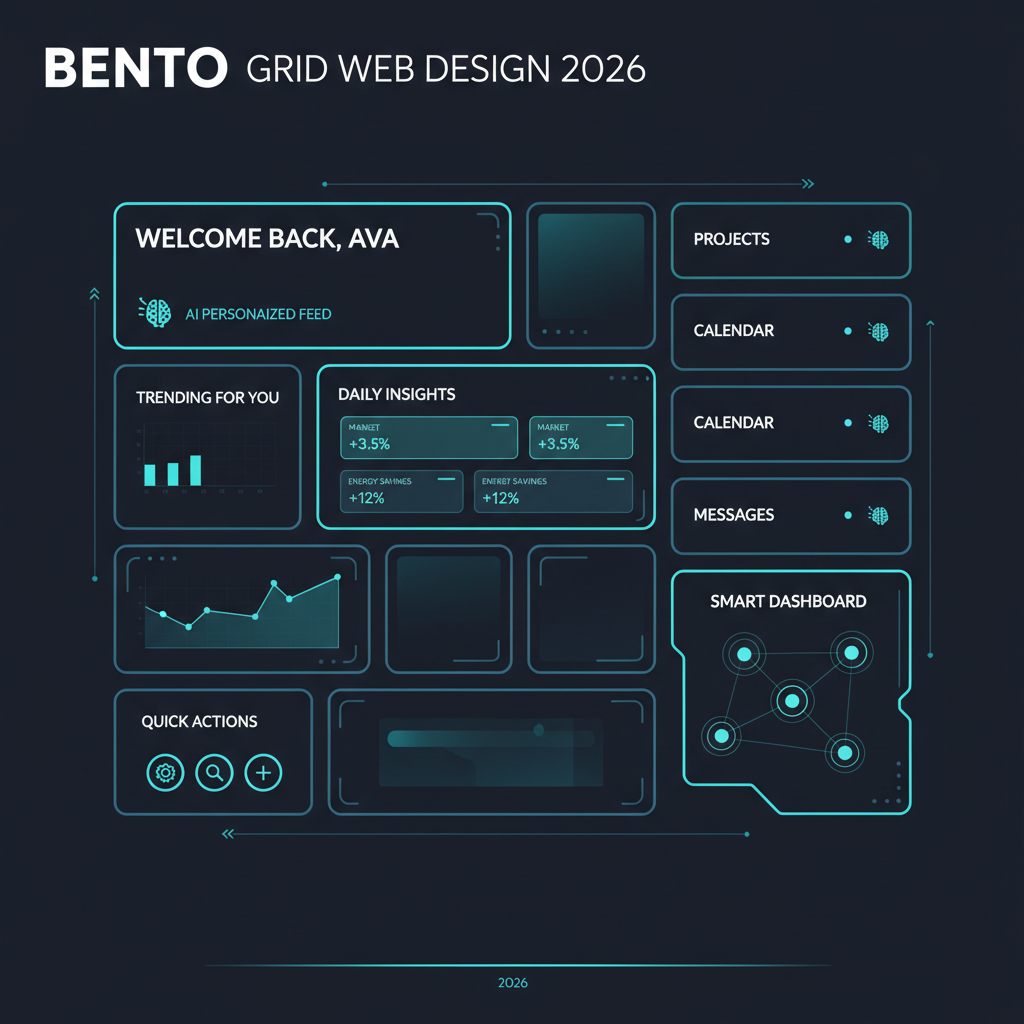
Trend #3: Bento Grid Design
Popularized by Apple's product pages and now adopted across SaaS, e-commerce, and portfolio sites, bento grid design is 2026's most versatile layout trend. Named after the Japanese lunch box with its organized compartments, bento grids use asymmetric card modules of varying sizes to present information in a visually rich, scannable format.
Why it works so well in 2026:
- ✅ Mobile-first by nature — Cards reflow elegantly on any screen size.
- ✅ Information density without overwhelm — Complex feature sets become instantly scannable.
- ✅ Brand personality through card design — Each card can have its own visual treatment while maintaining overall cohesion.
- ✅ Excellent for AI personalization — Individual cards can be swapped based on user context.
Trend #4: Kinetic Typography
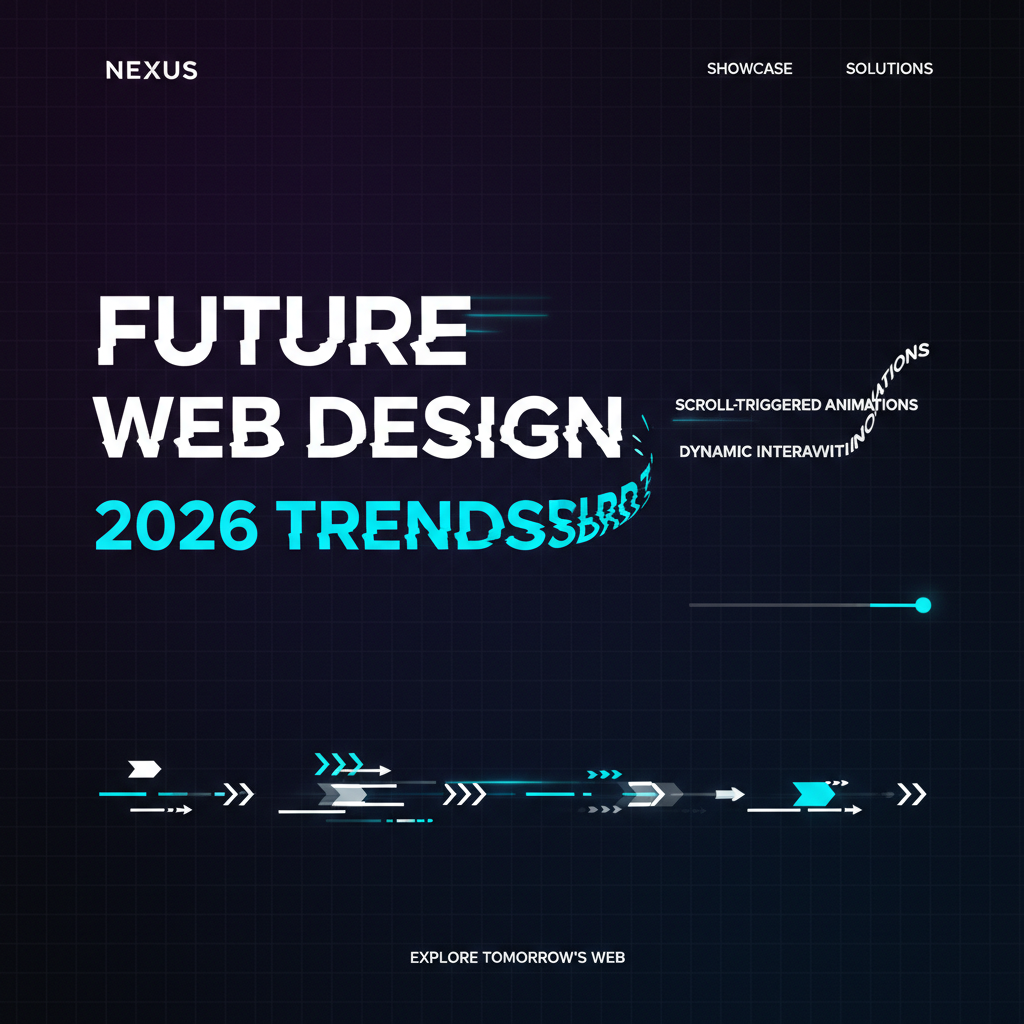
Kinetic typography — text that moves, morphs, and animates — has become the defining hero element of 2026's most impactful websites. When executed well, animated type achieves what static headlines cannot: it commands attention, conveys energy, and communicates personality in the first three seconds.
The techniques driving the best kinetic type experiences:
- Scroll-triggered reveals — Words appear, split, or transform as users scroll through sections.
- Hover state morphing — Text changes weight, color, or form on interaction.
- Marquee and ticker formats — Continuously scrolling text for brand statements, social proof, and stats.
- Variable font animation — Font weight, width, and optical size animating fluidly through CSS.
- Text masking with video — Video footage revealed through letterforms for dramatic visual impact.
Performance caveat: All animations should respect prefers-reduced-motion media query for accessibility. Google's 2026 Core Web Vitals update penalizes layout shift caused by poorly implemented animations.
Trend #5: AI-Powered Personalization
The most technically sophisticated trend on this list is also the one with the highest ROI potential. AI web personalization in 2026 means every visitor sees a version of your website tailored to their context — their industry, their location, their stage in the buying journey, their previous interactions with your brand.
Personalization elements now being AI-driven on top-performing sites:
- Dynamic hero copy — Headline changes based on traffic source ("Welcome, [City] Business Owners" or "The Platform Your Industry Uses")
- Personalized social proof — Show testimonials from companies in the visitor's industry
- Adaptive pricing displays — Highlight the tier most relevant to the visitor's profile
- Smart CTAs — Return visitors see different CTAs than first-time visitors
- Behavioral exit intent — Offers triggered by specific user behaviors, not just exit intent
Brands implementing AI personalization are seeing conversion rate improvements of 25–40% without changing any other aspect of their website (Optimizely 2026 Experimentation Report).
Trend #6: Dark Mode First + Chromatic Design
Dark mode is no longer just a user preference toggle — in 2026, dark-first design has become the primary aesthetic for brands targeting tech-savvy, professional, and premium audiences. The data backs this: 57% of global users prefer dark mode on web interfaces (UX Collective 2026 Survey), and dark backgrounds increase perceived product premium-ness by 31%.
The evolution in 2026 is chromatic dark design — deep navy or true black backgrounds with vibrant accent colors (electric cyan, neon orange, electric lime) used strategically to direct attention and signal brand energy.
What These Trends Mean for Your Business
Before you redesign your site with every trend on this list, here's the strategic framework:
- Start with performance — A fast, accessible site outperforms a beautiful slow one every time. Core Web Vitals first.
- Choose 2-3 trends that align with your brand — Trying to implement everything creates visual chaos.
- Prioritize mobile — 64% of your traffic is on mobile. Design for mobile first, then enhance for desktop.
- Measure everything — A/B test trend implementations against your current design before a full rollout.
At Stucci Marketing Group, every website we build is engineered around these exact principles — beautiful, fast, mobile-perfect, and built to convert. Our process starts with a deep understanding of your business goals, then we design and build the website your brand deserves.
Frequently Asked Questions: Web Design Trends 2026
Q: What is the biggest web design trend in 2026?
The single biggest trend is the convergence of AI personalization with immersive design. Websites that adapt their content, layout, and messaging to individual visitors — while delivering a visually immersive experience — are significantly outperforming static, one-size-fits-all designs.
Q: Is 3D web design worth the investment?
For the right businesses — yes. E-commerce brands using 3D product visualization see conversion rate increases of 40–66% (Shopify 2026 data). For service businesses, subtle 3D elements in hero sections increase time-on-page. The key is performance-optimized implementation.
Q: What is bento grid web design?
Bento grid design uses asymmetric, modular card layouts — inspired by Japanese bento boxes — to present information in a visually dynamic, scannable way. It's particularly effective for SaaS feature showcases, portfolio sites, and product landing pages.
Q: How does kinetic typography affect SEO?
Kinetic typography itself doesn't directly affect SEO, but its impact on engagement metrics (time-on-page, bounce rate, scroll depth) creates positive SEO signals. Ensure animated text is also present as crawlable HTML for search engines.
Q: Should I redesign my website in 2026?
If your site is more than 2 years old, a performance and design audit is essential. Key signals that a redesign is overdue: Core Web Vitals score below 70, bounce rate above 65%, conversion rate below 2%, or any design element that no longer reflects your brand positioning.
Q: How much does a 2026 web design project cost?
Costs range significantly based on complexity. A professional 5-page business site starts around $1,500–$3,500. Business Pro sites with custom design systems and CMS range from $3,500–$8,000. Enterprise projects with 3D, AI personalization, and complex functionality start at $8,000+. See our full web development pricing here.
Conclusion: Design for 2026, Build for the Future
The best web design trends of 2026 share a common thread: they prioritize experience over decoration, performance over aesthetics, and connection over complexity. The sites that will define the next three years are being built right now — by teams who understand both the art and the science of web design.
Your website is open 24/7, works while you sleep, and is often the first and last impression a potential client has of your business. It deserves more than a template.
Ready to build a website that reflects where your business is heading? Book a free strategy session with Stucci Marketing Group — we'll review your current site, show you exactly what's holding it back, and design a roadmap to a website that converts at the highest level.
Written by
Rocci J. Stucci
Founder & CEO of Stucci Marketing Group. 15+ years in digital media and marketing strategy, plus 20+ years in manufacturing operations and Lean Six Sigma.
More about Rocci →Want help putting this into practice?
Book a free strategy call — we'll map it to your business in 30 minutes.
Explore Web Development →