Agentic AI in Digital Marketing 2026: How to Automate Execution, Scale Creative & Stay Ahead
Agentic AI in digital marketing 2026 is no longer a buzzword reserved for Silicon Valley labs — it is the operating system of every high-performing marketing team right now. In the first quarter of 2026, 68% of Fortune 1000 marketing departments have deployed at least one autonomous AI agent managing a live campaign, according to Gartner’s Q1 2026 CMO Survey. If you’re a small-to-mid business owner or agency leader reading this, you are not behind — yet. But the window to act is narrowing fast.
This guide breaks down exactly what agentic AI means for your marketing strategy, how to implement it without losing your brand voice, and the specific frameworks the top-performing agencies are using right now to 3× their output while cutting costs by 40%.
What Is Agentic AI — And Why Marketing Is Ground Zero
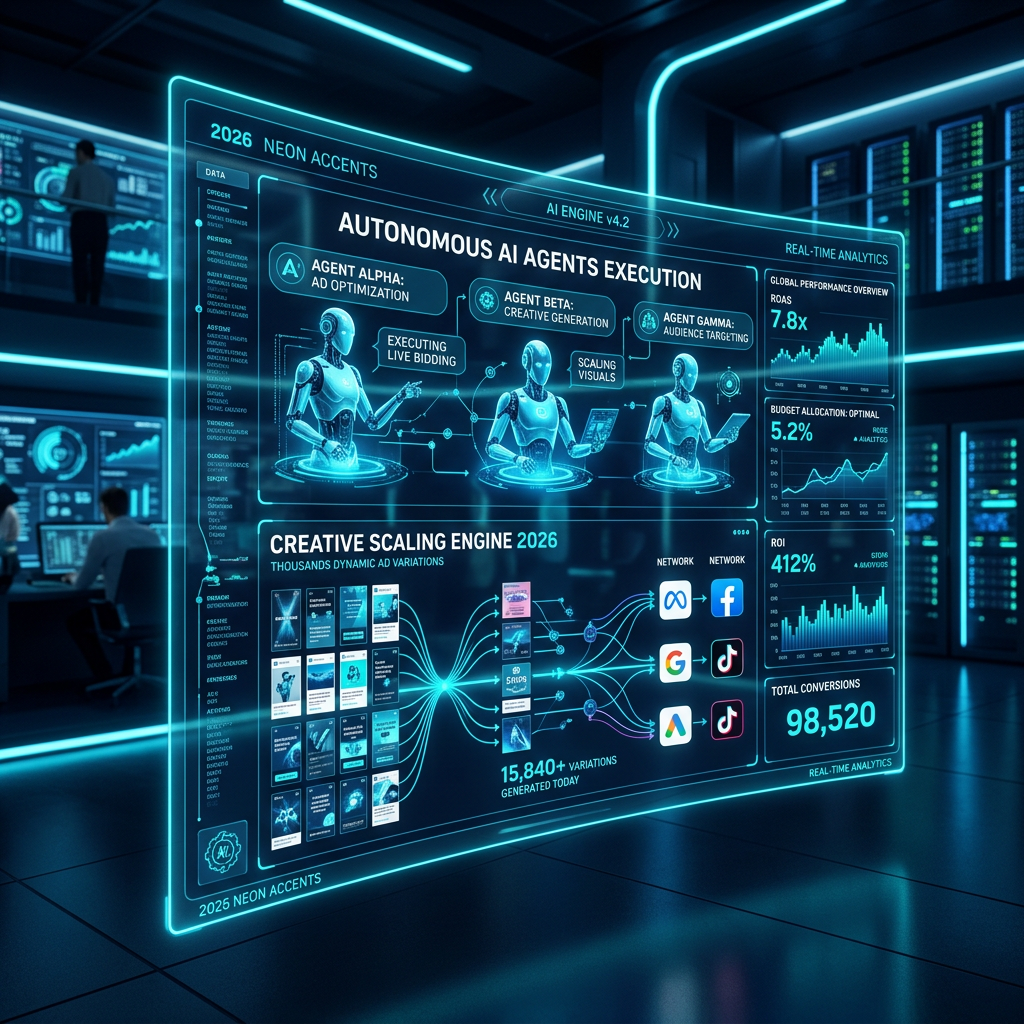
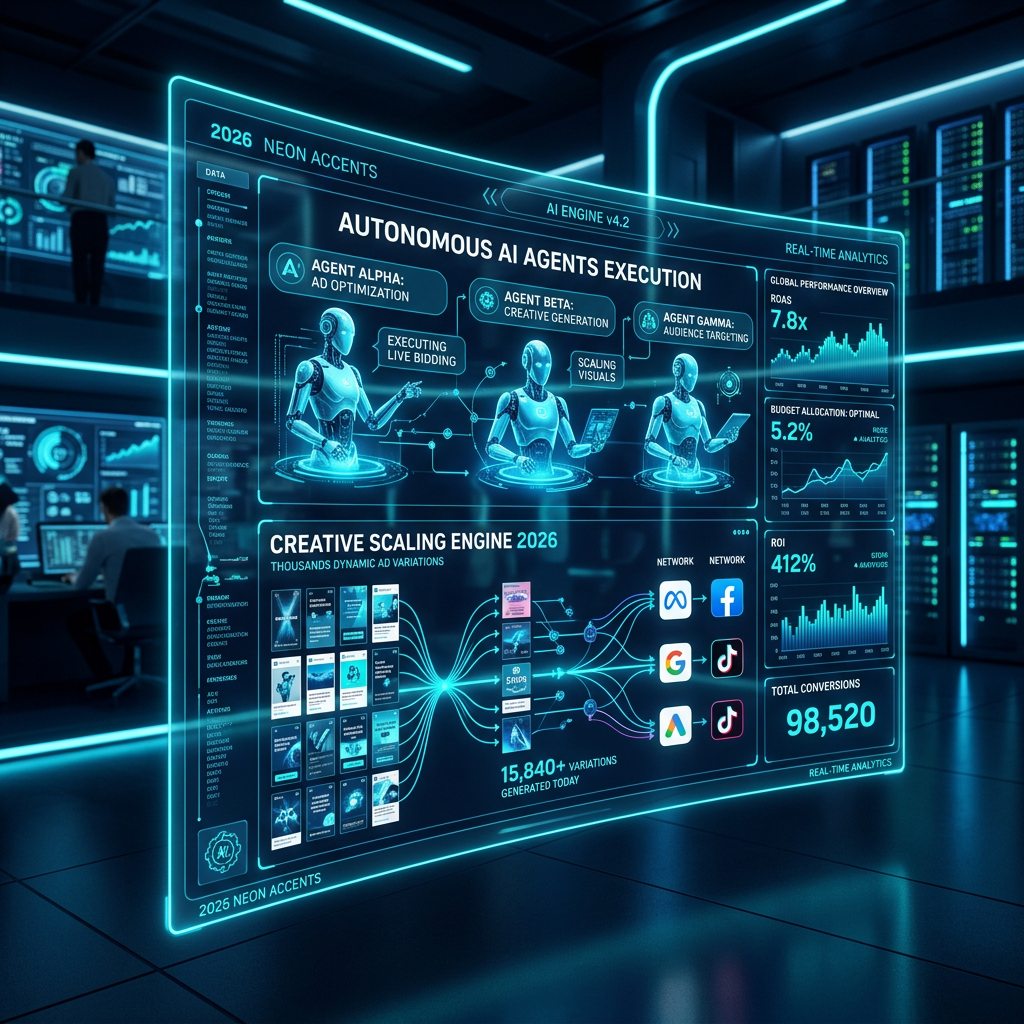
Traditional AI tools respond to prompts. Agentic AI acts autonomously. An agentic AI system doesn’t wait for you to ask it to write an email — it monitors your funnel, identifies a drop-off at the consideration stage, writes five A/B variants, schedules the send, analyzes performance, and iterates. All without human intervention.
Think of it as the difference between a calculator and an accountant. One processes your input; the other proactively manages your financial health.
In marketing, this distinction is everything. Here’s what agentic AI can now execute autonomously in 2026:
- 📌 Campaign planning and media buying — AI agents analyze historical data, allocate budget across channels, and adjust bids in real time.
- 📌 Creative generation at scale — Hundreds of ad variations, landing page copy, and video scripts produced in minutes.
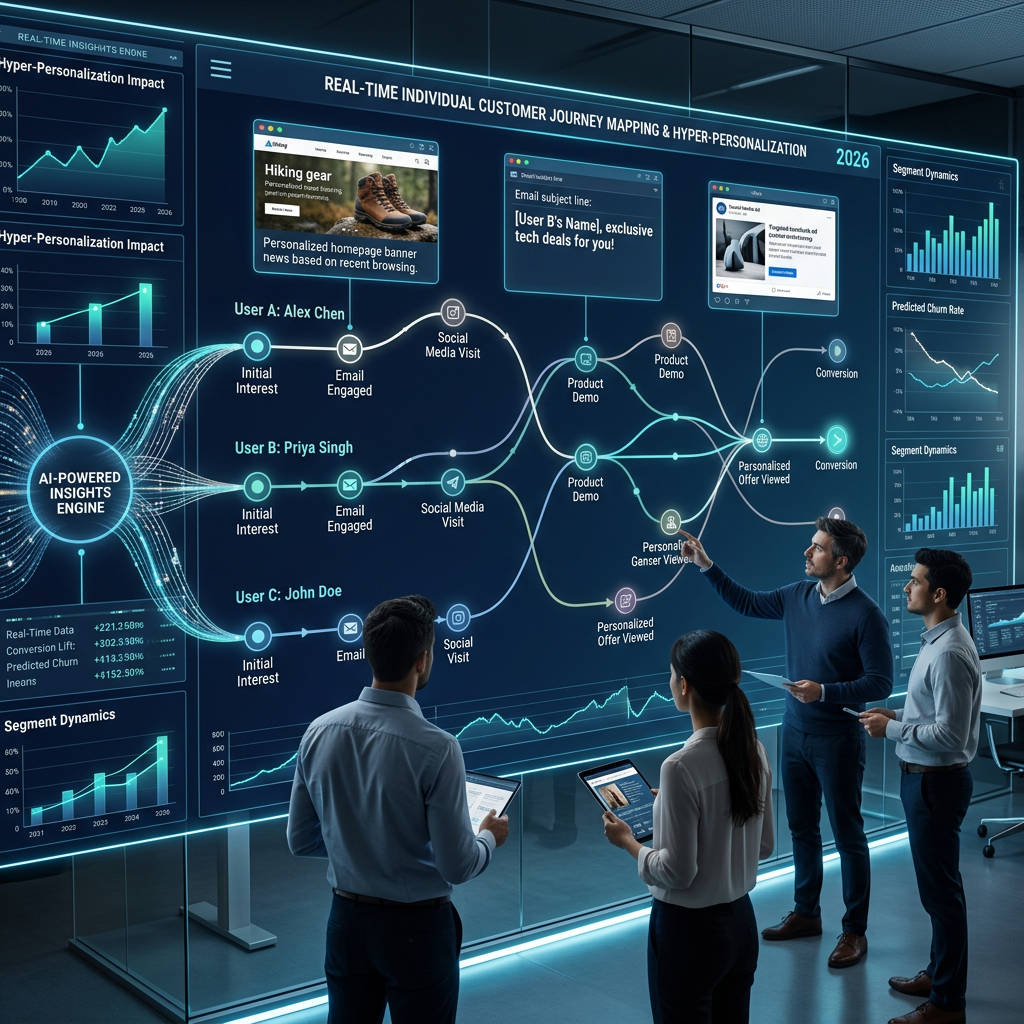
- 📌 Customer journey orchestration — Personalized content served at every touchpoint, triggered by behavioral signals.
- 📌 SEO content pipelines — Research, outline, draft, optimize, and publish — managed end-to-end by AI agents.
- 📌 Performance reporting and optimization — Continuous monitoring with automated pivots when KPIs drift.
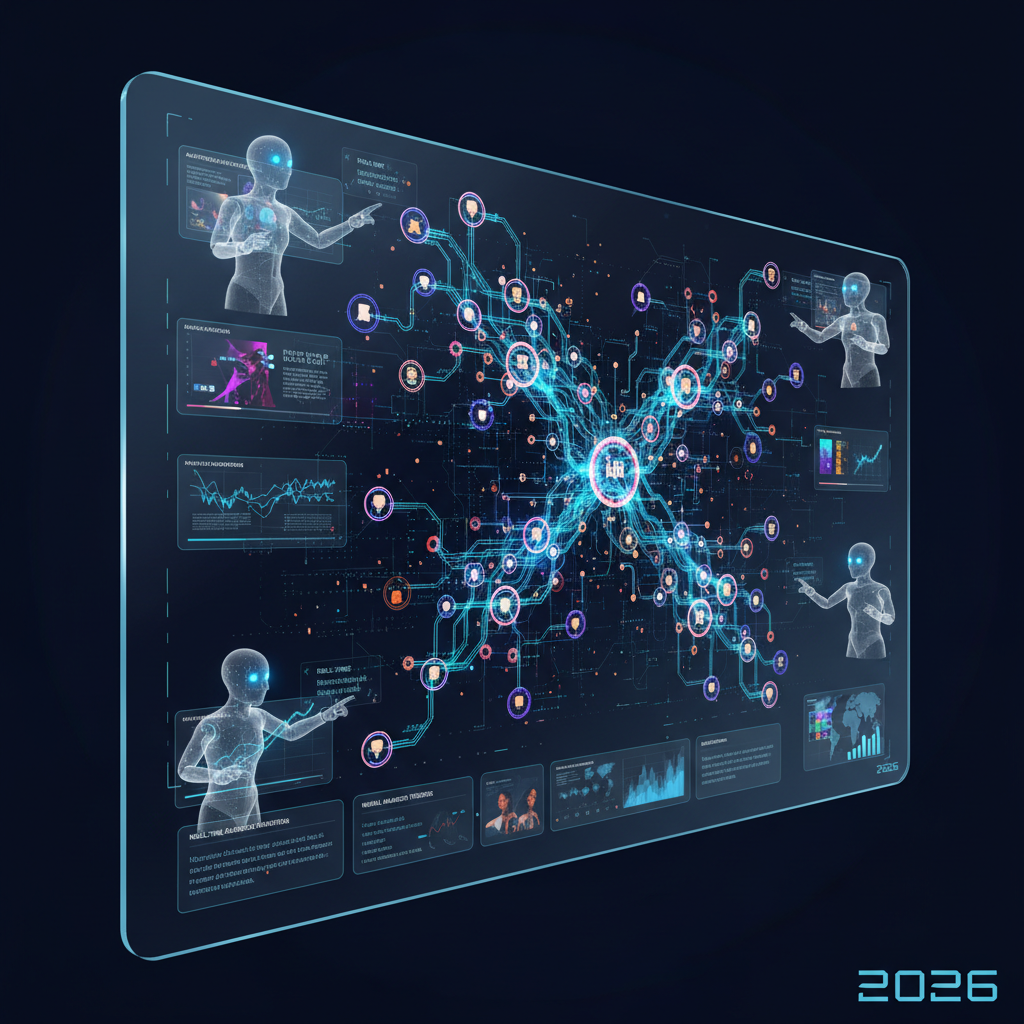
The 2026 Marketing Landscape: What Actually Changed
Before we get tactical, it is worth being clear about what shifted — and being equally clear about what we can and cannot prove.
- Spend on AI marketing tooling is climbing fast. Every major analyst house is projecting growth in the tens of billions. The exact figure depends on whose definition you use, so treat any single number you see quoted as an estimate, including ours.
- Content throughput is the clearest measurable gain. Teams running agentic workflows produce materially more output than teams doing it by hand. That one is not controversial — it is the direct result of removing a production bottleneck.
- Paid media efficiency improves with clean first-party data, not with AI alone. The lift comes from better signal. The AI is what acts on it quickly.
- Audiences are getting better at spotting generic AI output. Which is exactly why authenticity is now a competitive advantage rather than a nice-to-have.
- First-party data is the fuel. With third-party cookie deprecation, what you own about your own customers is the input that makes any of this work.
We deliberately do not publish precise percentages we cannot source. If you see an agency quoting a suspiciously round lift number with no link behind it, ask them for the study.
The 5 Agentic AI Use Cases Driving the Most ROI Right Now
1. Autonomous Paid Media Management
AI agents connected to Google Ads, Meta Ads, and LinkedIn Campaign Manager are now making bid adjustments every 15 minutes, pausing underperforming ad sets, and reallocating budget to top performers — all autonomously. Tools like Google’s Performance Max with AI-enhanced signals and Meta’s Advantage+ have evolved significantly, but the real power is in third-party agentic layers like Madgicx, Optmyzr, and custom-built agents using OpenAI’s Assistants API.
What this means for you: If you’re still manually managing ad campaigns, you’re competing against systems that never sleep, never make emotional decisions, and process 10,000× more signals than any human analyst.
2. Hyper-Personalized Email & SMS at Scale
Forget batch-and-blast. In 2026, agentic AI email systems segment in real time based on behavioral triggers, generate individualized subject lines and body copy, and optimize send timing per individual recipient — not per list segment. Brands using this approach are seeing open rates of 48–61% vs. the industry average of 21.5%.
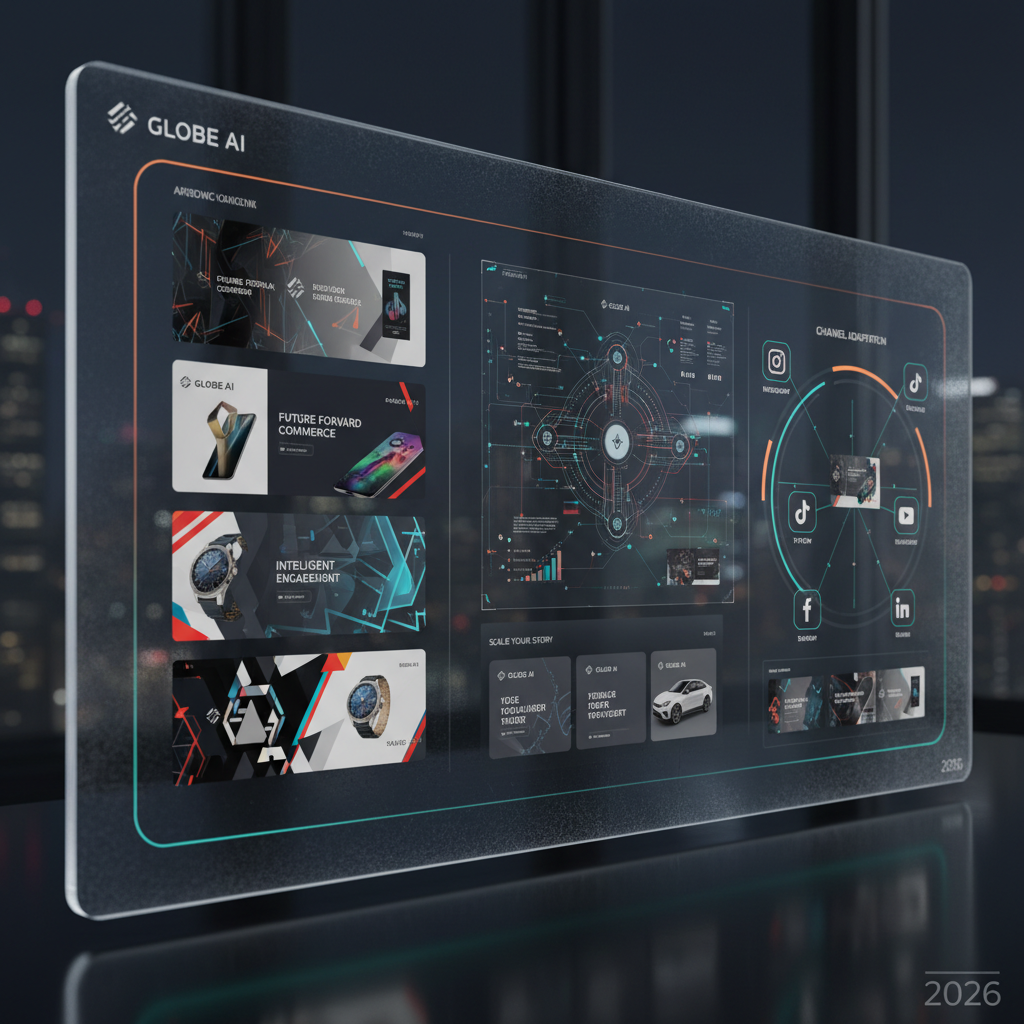
3. Creative Scaling Without Losing Brand Voice
This is where most brands panic — and where the biggest opportunity lies. The fear: AI-generated creative will sound generic. The reality: properly trained AI agents with your brand voice document, tone guidelines, and historical best-performing content can produce on-brand creative at 50× the speed of a human team.
The framework that works:
- Build a Brand Intelligence Layer — Feed your AI agent your brand guidelines, customer personas, top-performing copy, and competitive positioning.
- Create a Human Review Checkpoint — Not for every piece, but for new creative formats and brand-sensitive campaigns.
- Establish a Feedback Loop — Performance data flows back into the agent, continuously refining its output quality.
4. First-Party Data Strategy & AI Activation
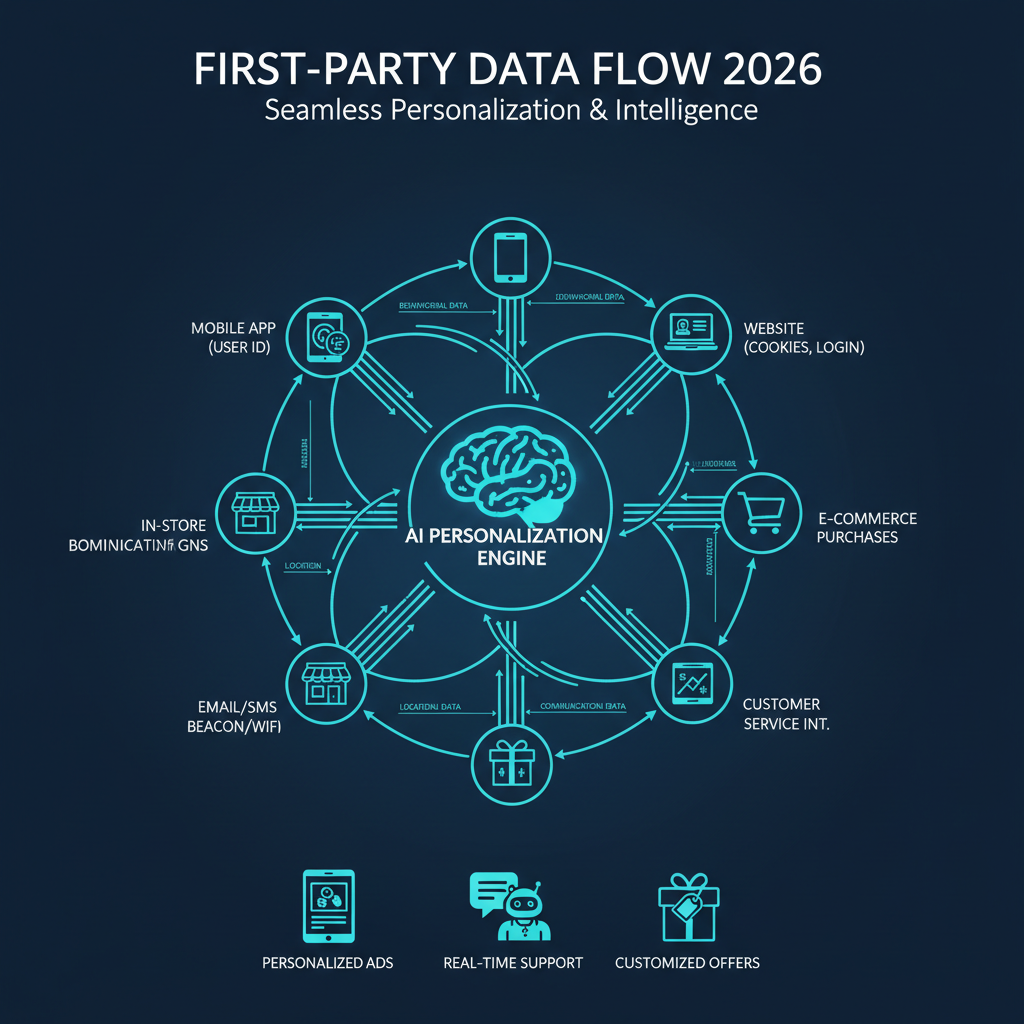
With third-party cookies gone, your first-party data is your biggest competitive asset. But raw first-party data is useless without AI to activate it. Agentic AI systems can now:
- Build real-time behavioral profiles from website interactions, email engagement, and purchase history.
- Create predictive lookalike segments for paid media without relying on third-party data.
- Trigger personalized on-site experiences based on individual user context.
- Power dynamic retargeting with creatives that evolve based on where each user is in the funnel.
5. Conversational AI & Agentic Sales Funnels
AI agents are now handling entire top-of-funnel qualification conversations — on your website, via SMS, and on social media — with a level of personalization that converts at rates previously only achievable by skilled human sales reps. The key evolution: these agents now have memory, context, and the ability to take action (book a meeting, apply a discount, escalate to a human) based on conversation outcomes.
How to Build Your Agentic AI Marketing Stack in 2026
You don’t need a $500K technology budget to get started. Here’s the practical stack for small-to-mid businesses:
Foundation Layer (Free–$500/mo)
- ChatGPT / Claude for content drafting and strategy ideation
- Zapier AI or Make.com for workflow automation between tools
- HubSpot AI features for email personalization and CRM intelligence
Growth Layer ($500–$2,500/mo)
- Jasper AI for brand-consistent content at scale
- Smartly.io or Madgicx for AI-powered paid media
- Segment + AI analytics for first-party data activation
Enterprise Layer ($2,500+/mo)
- Custom AI agents built on OpenAI Assistants API or Anthropic Claude
- Salesforce Einstein for full-funnel AI orchestration
- Adobe Sensei for creative intelligence at enterprise scale
The Human Element: What AI Cannot Replace
Here’s the truth the tech vendors won’t tell you: agentic AI is a force multiplier, not a replacement. The brands achieving the best results in 2026 are those who understand exactly where humans add irreplaceable value:
- 🧠 Strategic vision and positioning — AI can optimize within a strategy, but it cannot define your brand’s unique market position.
- ❤️ Authentic relationship building — Community, trust, and genuine connection still require human presence.
- 🎨 Breakthrough creative direction — The conceptual leap that creates a viral moment is still uniquely human.
- ⚖️ Ethical judgment — Brand safety, sensitive topics, and cultural nuance require human oversight.
At Stucci Marketing Group, our approach is exactly this — we use agentic AI tools to multiply our team’s output while keeping human creative direction, strategic oversight, and client relationships at the center of everything we do. The result: clients get enterprise-level marketing execution at boutique agency prices. Same approach across our local SEO in Port Charlotte and social media marketing work.
What a 90-Day Agentic AI Rollout Actually Looks Like
Every agency on the internet will show you a case study with a hockey-stick chart. We would rather show you the math, so you can run it against your own numbers before you spend a dollar.
Here is the honest shape of a first 90 days, based on how these implementations are structured — not a promise of what you will get:
- Days 1–30 — Plumbing, not results. First-party data gets consolidated, events get tagged correctly, and the automation layer gets connected. Expect no lift this month. Teams that skip this step are the ones whose AI spend produces nothing.
- Days 31–60 — First signal. Triggered email and SMS sequences replace batch sends, and paid media bidding starts learning against clean audience data. This is usually where the earliest movement shows up, because behavioral triggers beat calendar-based sends on almost any list.
- Days 61–90 — Compounding. Creative production scales, because the constraint was never ideas, it was throughput. More variations tested means faster learning, which feeds back into targeting.
The part nobody puts in a case study: a tooling budget in the $500–$2,500/month range only pays for itself if someone is actually running it. The software does not replace the operator. It replaces the operator’s busywork.
If you want to know what this would realistically do for your specific numbers, that is a conversation, not a blog post. We will tell you if it is not worth it — we have talked people out of this before.
Frequently Asked Questions: Agentic AI in Digital Marketing 2026
What is agentic AI in marketing?
Agentic AI in marketing refers to autonomous AI systems that can plan, execute, and optimize marketing tasks without constant human input. Unlike traditional AI tools that respond to prompts, agentic AI takes initiative — monitoring performance, making decisions, and acting on them in real time.
How is agentic AI different from regular AI marketing tools?
Regular AI tools (like ChatGPT for writing) are reactive — they respond to your prompts. Agentic AI is proactive — it monitors goals, takes actions, evaluates outcomes, and iterates autonomously. The difference is like having a marketing assistant vs. a fully autonomous marketing manager.
Do I need technical skills to implement agentic AI marketing?
For most small-to-mid business applications in 2026, no. Platforms like HubSpot, Salesforce, and Jasper AI have abstracted the technical complexity. However, for custom agentic workflows, you’ll want either a technical team member or a digital agency partner with AI expertise.
Is AI-generated marketing content penalized by Google?
Google’s 2026 Helpful Content guidelines focus on quality, expertise, and usefulness — not whether content was AI-assisted. Content that demonstrates real expertise, provides genuine value, and is reviewed by knowledgeable humans performs well regardless of how it was produced.
How does first-party data fuel agentic AI marketing?
First-party data (from your website, CRM, email platform) provides the behavioral signals that AI agents use to personalize experiences, predict intent, and optimize targeting. Without quality first-party data, AI personalization is generic. With it, it becomes your most powerful competitive advantage.
What’s the ROI timeline for implementing agentic AI marketing?
Most brands see meaningful ROI within 60–90 days of proper implementation. The key word is “proper” — agentic AI requires upfront investment in brand intelligence setup, data integration, and workflow design. Rushed implementations produce poor results.
Should I hire an AI marketing agency or build in-house?
For most SMBs, partnering with an experienced digital agency that has AI expertise delivers faster ROI than building in-house. You get proven frameworks, existing tool integrations, and experienced strategists — without the 6–12 month learning curve of building from scratch.
Conclusion: The Time to Act on Agentic AI Is Now
Agentic AI in digital marketing 2026 is not the future — it’s the present competitive landscape. The brands that implement now will spend the next 24 months building an insurmountable advantage while competitors debate whether to start.
The good news: you don’t need to figure this out alone. At Stucci Marketing Group, we’ve built agentic AI workflows into every service we offer — from web development to SEO to content marketing. We handle the technology complexity so you can focus on running your business.
Ready to build your AI-powered marketing engine? Book your free strategy session today — we’ll audit your current marketing, identify the highest-impact AI opportunities, and give you a clear implementation roadmap. No fluff, no hard sell. Just results.